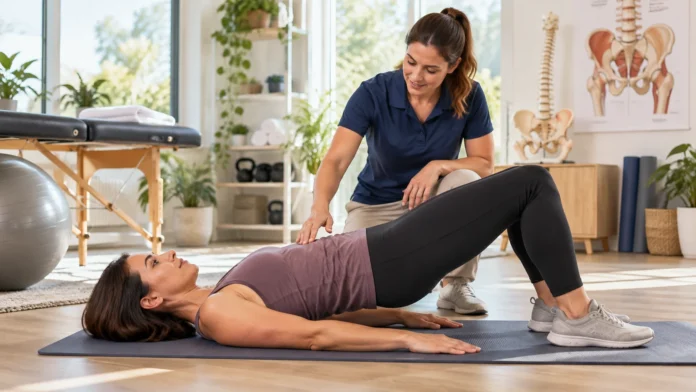
Sacroiliac joint pain can make everyday activities like walking, standing, sitting, and getting out of bed uncomfortable. The sacroiliac joints connect the lower spine to the pelvis and help transfer weight between the upper body and legs. When these joints or surrounding structures become irritated, discomfort may develop around the lower back, buttocks, or hips. Fortunately, appropriate SI joint pain exercises may help some people improve mobility and manage symptoms.
Gentle stretching, controlled strengthening, and movement-based rehabilitation are commonly included in treatment plans for sacroiliac joint discomfort. These activities aim to support the muscles around the pelvis, improve movement control, and reduce unnecessary strain. However, not every exercise is suitable for everyone, and some movements can make symptoms worse.
Understanding the possible causes of SI joint pain is important before starting any exercise routine. Similar symptoms can come from the lower spine, hips, or surrounding nerves, making accurate assessment essential. This guide explains common causes, symptoms, gentle exercise options, movements that may aggravate discomfort, and practical strategies for supporting recovery.
What Is SI Joint Pain?
SI joint pain refers to discomfort associated with one or both sacroiliac joints, which connect the sacrum at the base of the spine to the pelvic bones. These joints have limited movement but play an important role in transferring forces during everyday activities. Their strong supporting ligaments help maintain pelvic stability. Irritation or dysfunction in this region may contribute to pain.
Discomfort associated with the sacroiliac joint is often felt around the lower back, upper buttocks, or one side of the pelvis. Some people experience pain extending toward the hip, groin, or thigh. Symptoms can overlap with other musculoskeletal conditions, making self-diagnosis unreliable. A healthcare professional can evaluate whether the sacroiliac region is likely contributing to the discomfort.
The severity of symptoms varies depending on the individual and underlying cause. Some people notice occasional stiffness, while others experience persistent discomfort during daily activities. SI joint pain does not always indicate permanent damage or a serious condition. Appropriate assessment, activity modification, and individualized rehabilitation may help improve comfort and function.
Common Causes of SI Joint Pain
SI joint discomfort can develop from several factors, including inflammatory conditions, previous injuries, and changes in how forces are distributed through the pelvis. Certain activities may temporarily aggravate the region, particularly when symptoms are already present. However, pain does not necessarily mean the joint is misaligned or unstable. Identifying the actual cause requires considering the complete clinical picture.
Pregnancy and the postpartum period can also be associated with pelvic girdle pain because the body experiences changes in loading and movement demands. Some people develop discomfort after falls or other injuries. Inflammatory arthritis, including certain forms of spondyloarthritis, can affect the sacroiliac joints. These conditions may require treatment beyond a general exercise routine.
Sometimes, pain that appears to originate from the SI joint actually comes from the lumbar spine, hip joints, or nearby tissues. Conditions involving nerves may produce overlapping symptoms. This is why location alone cannot establish the diagnosis. A medical assessment is especially important when pain is persistent, worsening, or accompanied by other unusual symptoms.
Signs and Symptoms of Sacroiliac Joint Dysfunction
One common symptom associated with sacroiliac joint pain is discomfort near the lower back and upper buttock. Pain may be more noticeable on one side, although both sides can be affected. Some people describe a dull ache, while others report sharper discomfort during certain movements. The intensity and pattern may change throughout the day.
Activities involving prolonged sitting, standing, stair climbing, or changing positions can sometimes aggravate symptoms. Walking may feel uncomfortable for some people, while gentle movement may help others. The response depends on the underlying condition and individual movement tolerance. Symptoms alone cannot reliably distinguish SI joint dysfunction from other causes of lower back pain.
Additional symptoms such as tingling, numbness, or radiating leg pain deserve medical evaluation because they may suggest another source of discomfort. Fever, unexplained illness, or significant pain following an injury also requires attention. Early assessment can help identify appropriate treatment options. Understanding the symptom pattern supports safer decisions about physical activity.
Can Exercises Help Relieve SI Joint Pain?
Exercise-based rehabilitation may help some people manage SI joint discomfort by improving strength, movement control, and general physical function. Programs often focus on the muscles surrounding the hips, pelvis, abdomen, and lower back. These muscles contribute to everyday movement and load management. However, the effectiveness of individual exercises depends on the cause of pain and personal circumstances.
Gentle mobility activities may reduce stiffness and make certain movements feel more comfortable. Strengthening exercises can support the body’s ability to perform daily tasks without excessive fatigue. Neither approach guarantees immediate relief, and more exercise is not always better. A gradual program tailored to symptoms is generally preferable to forcing painful movements.
A physical therapist can help determine which activities are appropriate and whether an exercise should be modified. Rehabilitation may also include education, activity adjustments, and other treatments. People experiencing new or unexplained symptoms should seek assessment before assuming the SI joint is responsible. Exercise works best as part of a suitable overall management plan.
1. Pelvic Tilts for Gentle Lower Back Mobility
Pelvic tilts are a gentle movement exercise often included in rehabilitation programs for lower back and pelvic discomfort. The movement involves small changes in pelvic position while keeping the surrounding muscles relatively relaxed. It may help improve awareness of how the pelvis and lower back move together. Some people find the controlled motion comfortable during periods of mild stiffness.
Pelvic tilts are commonly performed in supported positions selected by a physical therapist. The emphasis is on gentle, controlled movement rather than forcing the lower back into an uncomfortable range. People with SI joint symptoms may respond differently depending on their underlying condition. Any movement that increases pain should be stopped and reviewed with a healthcare professional.
This exercise is not intended to reposition the sacroiliac joint or correct a presumed misalignment. Instead, it may form part of a broader mobility and movement-control program. The appropriate starting position and movement range vary between individuals. A clinician can determine whether pelvic tilts are suitable and how they fit into a rehabilitation plan.
2. Knee-to-Chest Stretch for Lower Back Comfort
The knee-to-chest stretch is commonly used to explore gentle movement around the hips and lower back. It involves bringing the leg toward the body within a comfortable range, typically while supported. Some people experience a mild stretching sensation in the lower back or buttock region. However, the movement is not a specific treatment for every cause of SI joint pain.
Stretching can be helpful when surrounding muscles feel stiff, but discomfort should not be interpreted as proof that a particular muscle needs stretching. People with certain hip or spinal conditions may find knee-to-chest movements uncomfortable. A physical therapist can assess whether this exercise is appropriate. The goal is comfortable movement rather than achieving the deepest possible stretch.
For some individuals, gentle flexibility work may complement strengthening and movement-control exercises. Others may benefit more from different positions or activities. There is no universal stretching routine that reliably relieves sacroiliac pain for everyone. Paying attention to symptom changes and following individualized guidance can help prevent unnecessary aggravation.
3. Glute Bridges for Hip and Pelvic Strength
Glute bridges are a strengthening exercise commonly used to engage muscles around the buttocks and hips. These muscles contribute to lower-body movement and help manage forces during activities such as walking and standing. A bridge exercise may be included in rehabilitation programs for certain types of pelvic discomfort. Its suitability depends on the person’s symptoms and physical capacity.
A typical glute bridge involves controlled lifting of the pelvis from a supported position using the surrounding hip muscles. However, the movement may not be appropriate during every stage of recovery. Some people experience discomfort when lifting or lowering the pelvis. A clinician can adjust the range of movement or recommend an alternative strengthening activity.
The purpose of glute strengthening is to improve functional capacity rather than force the SI joint into a different position. Progress depends on movement tolerance and the individual’s rehabilitation goals. Repeatedly performing painful bridges is unlikely to be helpful. Professional guidance can make strengthening exercises more suitable and comfortable.
4. Clamshell Exercises for Hip Stability
Clamshell exercises are frequently included in physical therapy programs targeting the muscles around the outer hip. These muscles contribute to pelvic control during activities such as walking and standing on one leg. Developing appropriate hip strength may help improve movement efficiency. However, clamshells are not specifically proven to correct sacroiliac joint alignment.
The exercise generally involves controlled hip movement in a supported side-lying position. The exact range and resistance should reflect the individual’s comfort and physical abilities. Some people with lateral hip pain or pelvic discomfort may find the position irritating. A physical therapist can recommend a suitable variation or alternative if symptoms increase.
Hip strengthening is often most useful when combined with other aspects of rehabilitation. These may include movement education, gradual activity progression, and exercises addressing additional muscle groups. The goal is improved everyday function rather than isolating one muscle as the cause of pain. Consistency and appropriate intensity are generally more valuable than difficult exercise variations.
5. Bird Dog Exercise for Core Control
The bird dog exercise is commonly used in rehabilitation programs that emphasize coordination between the trunk and hips. It challenges the body to maintain controlled positioning while the arms or legs move. This can support general strength and movement awareness. Some physical therapists include modified bird dog exercises for people with lower back or pelvic discomfort.
Different variations place different demands on the trunk, shoulders, and pelvis. A full version may be uncomfortable for someone experiencing active pain, while a simpler variation may be better tolerated. The goal is smooth movement without unnecessary strain. Painful or unstable-feeling movements should be reviewed with a qualified professional before continuing.
Bird dog exercises are not intended to immobilize the pelvis or eliminate all natural spinal movement. Instead, they may improve the ability to control movement during everyday activities. Their benefits depend on appropriate exercise selection and gradual progression. A personalized rehabilitation program can determine whether this exercise supports an individual’s recovery goals.
6. Cat-Cow Stretch for Gentle Spinal Movement
The cat-cow stretch is a mobility exercise involving gradual changes in spinal position. It is often used to encourage gentle movement through the back and surrounding tissues. Some people find this activity comfortable when experiencing mild stiffness. However, it does not directly treat every condition that can cause pain around the sacroiliac region.
Cat-cow movements are generally associated with a hands-and-knees position, although modified versions may be available. People with wrist, shoulder, knee, or back discomfort may require different support or alternative movements. The exercise should feel controlled rather than forced. A physical therapist can help identify a suitable range based on individual symptoms.
Gentle mobility exercises may be useful for maintaining confidence with everyday movement. However, increasing flexibility is not always the primary goal of SI joint rehabilitation. Some individuals benefit more from strength development or adjustments to their usual activities. The most appropriate combination depends on the underlying diagnosis and overall physical condition.
7. Hip Flexor Stretch for Pelvic Mobility
Hip flexor stretches target muscles located around the front of the hip. These muscles contribute to movements such as lifting the thigh and changing positions. Limited hip mobility can sometimes influence how people perform certain activities. However, tight hip flexors should not automatically be assumed to cause sacroiliac joint pain.
A gentle hip flexor stretch may be included in a rehabilitation program when a clinician identifies a relevant mobility limitation. Different positions can place different demands on the lower back and pelvis. People with SI joint discomfort may need modifications to avoid aggravating symptoms. Stretching should never involve forcing the body beyond a comfortable range.
Improving mobility can be helpful when it supports meaningful daily activities. However, stretching alone may not address weakness, inflammation, or other factors contributing to discomfort. A balanced treatment plan considers both movement capacity and symptom response. Professional guidance can help determine whether hip flexor stretching is beneficial.
Exercises to Avoid When You Have SI Joint Pain
Certain movements may aggravate SI joint symptoms, especially during periods of increased discomfort. Exercises involving heavy loading, sudden twisting, or repeated movements that reproduce pain may be poorly tolerated. However, no single exercise is universally harmful for everyone with sacroiliac discomfort. Individual symptoms and the underlying diagnosis should guide activity choices.
High-impact activities and demanding strength exercises may require temporary modification when symptoms are particularly bothersome. This does not mean these activities must be avoided permanently. A physical therapist can help determine whether changes in exercise intensity, movement range, or activity selection are appropriate. Gradual progression may allow people to return to preferred activities comfortably.
Avoiding all movement can also become unhelpful because prolonged inactivity may contribute to stiffness and reduced physical capacity. The goal is to identify activities that are manageable without repeatedly aggravating symptoms. Gentle walking or other comfortable movements may be useful alternatives. Medical advice is important when pain significantly limits normal activity.
How to Manage SI Joint Pain at Home
Managing SI joint pain at home often involves balancing comfortable movement with appropriate rest from aggravating activities. Remaining gently active may help some people maintain mobility and confidence. Short periods of rest can be useful during symptom flare-ups, but prolonged bed rest is generally discouraged. The appropriate balance depends on symptom severity and the underlying condition.
Heat or cold packs may provide temporary comfort for some individuals. Personal preferences and symptom responses vary, so neither approach works for everyone. Using a protective layer between the skin and a temperature pack helps reduce irritation. These measures may support comfort but do not replace evaluation when the underlying cause remains unclear.
Daily habits can also influence how comfortable the lower back and pelvis feel. Changing positions regularly, using supportive seating, and adjusting demanding activities may help manage symptoms. Maintaining comfortable movement is often more useful than attempting to hold the pelvis in one rigid position. Persistent discomfort should be discussed with a healthcare professional.
When to See a Doctor for SI Joint Pain
Medical evaluation is appropriate when lower back or pelvic pain persists, repeatedly returns, or interferes with everyday activities. A clinician can assess symptoms, medical history, and physical findings to identify possible causes. Several conditions can resemble sacroiliac joint dysfunction. Establishing an accurate diagnosis helps guide suitable treatment and rehabilitation.
Urgent medical attention is important if back pain occurs with new bladder or bowel control problems, numbness around the groin, or significant leg weakness. Fever, serious injury, or unexplained worsening symptoms also deserve prompt assessment. These signs may indicate conditions requiring more than routine exercise. They should not be managed through stretching alone.
Treatment options depend on the diagnosis and may include physical therapy, activity adjustments, or other medical approaches. Some inflammatory conditions require specialized care. A clinician can also help determine whether additional investigations are appropriate. Seeking timely advice supports safer recovery and avoids unnecessary reliance on exercises that may not address the problem.
Conclusion
SI joint pain exercises may help improve movement, strength, and daily comfort when they are appropriate for the underlying condition. Gentle activities such as pelvic tilts, modified stretches, glute bridges, clamshells, and bird dog exercises are sometimes included in rehabilitation programs. However, not every movement works for everyone. Exercise selection should reflect individual symptoms and professional assessment.
Understanding the causes of sacroiliac joint discomfort is equally important because lower back, hip, and nerve-related conditions can produce similar symptoms. Pain around the pelvis does not always indicate joint instability or misalignment. A personalized approach may include strengthening, mobility work, and practical activity modifications. Avoiding painful exercise and progressing gradually can support better symptom management.
If SI joint discomfort continues or becomes more severe, consult a qualified healthcare professional for appropriate evaluation. Physical therapy may help identify suitable movements and develop realistic rehabilitation goals. Maintaining comfortable activity while respecting personal limitations is often a valuable part of recovery. With appropriate guidance, many people can work toward improved mobility and everyday function.
Frequently Asked Questions
What are the best exercises for SI joint pain?
Pelvic tilts, glute bridges, clamshells, and modified core exercises may help some people with SI joint discomfort. The best options depend on the underlying diagnosis, symptoms, and individual movement tolerance.
Can stretching help relieve SI joint pain?
Gentle stretching may provide comfort when surrounding muscles feel stiff. However, stretching is not appropriate for every cause of SI joint pain, and movements that aggravate symptoms should be avoided.
Is walking good for sacroiliac joint pain?
Walking may help maintain mobility and physical function when it feels comfortable. Some people experience increased symptoms during longer walks, so activity levels should reflect individual tolerance and professional guidance.
How long does it take for SI joint pain to improve?
Recovery time varies depending on the cause, symptom severity, and treatment approach. Some people improve within weeks, while others require longer rehabilitation or additional medical treatment.
What exercises should I avoid with SI joint pain?
Avoid exercises that consistently worsen symptoms, particularly demanding movements involving heavy loads or sudden twisting. There is no universal restriction list, so a physical therapist can recommend appropriate modifications.