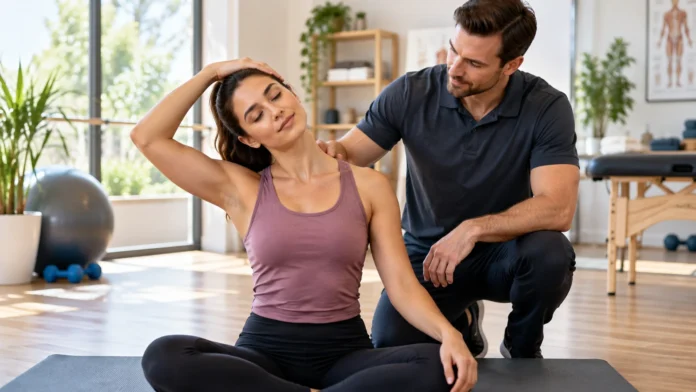
The trapezius muscle plays an important role in supporting your neck, shoulders, and upper back during everyday activities. Whether you are working at a desk, using a computer, or carrying out household tasks, these muscles help control shoulder blade movement and support comfortable posture. A gentle trapezius muscle stretch may help reduce feelings of stiffness, improve flexibility, and support comfortable movement.
Many people experience tightness around the upper shoulders after spending long periods in one position. Stress, repetitive movements, and limited physical activity can also contribute to muscle tension. Appropriate stretching and mobility exercises may help improve movement comfort, although not every case of neck or shoulder pain is caused by tight trapezius muscles.
Understanding proper stretching techniques is important because the trapezius connects several areas of the upper body. This guide explains trapezius muscle stretch benefits, basic form, common mistakes, and useful mobility tips. It also explores the different regions of the trapezius, possible causes of discomfort, and ways to incorporate gentle movement into a balanced routine.
What Is the Trapezius Muscle?
The trapezius is a large, superficial muscle covering part of the upper back, neck, and shoulders. It extends from the base of the skull and along the spine to the shoulder blade and collarbone. Its broad shape resembles a trapezoid, which explains its name. The muscle contributes to several important movements involving the shoulders and shoulder blades.
Anatomically, the trapezius is commonly divided into upper, middle, and lower regions. These sections work together to help control shoulder blade position and movement. They also contribute to activities involving lifting the arms, stabilizing the shoulders, and moving the neck. Each region has different functions, making the trapezius important for overall upper-body coordination.
Although people often associate this muscle with shoulder tightness, it performs many essential everyday functions. Carrying objects, reaching overhead, and maintaining comfortable working positions involve coordinated muscle activity. The trapezius also works alongside surrounding muscles rather than functioning independently. Understanding its anatomy helps explain why gentle movement and appropriate strengthening may support shoulder and neck comfort.
Understanding the Upper, Middle, and Lower Trapezius
The upper trapezius extends from the upper neck region toward the outer shoulder. It contributes to shoulder blade elevation and upward rotation while assisting certain neck movements. This region is often associated with feelings of tightness around the shoulders. However, discomfort in this area can have several causes beyond muscle shortening.
The middle trapezius is located across the upper back between the shoulder blades. It contributes to pulling the shoulder blades toward the spine, a movement known as scapular retraction. This action supports various reaching and pulling activities. The middle trapezius works with other muscles to maintain coordinated shoulder blade movement during daily tasks.
The lower trapezius extends farther down the upper and middle back. It contributes to shoulder blade control, including upward rotation and depression during certain movements. Together, the three regions support comfortable arm and shoulder function. A balanced mobility routine may address several surrounding muscles rather than focusing exclusively on the upper trapezius.
Benefits of a Trapezius Muscle Stretch
One potential benefit of trapezius stretching is improved comfort during gentle neck and shoulder movements. People who spend long periods sitting may notice temporary relief from feelings of muscle stiffness. Stretching can also encourage greater awareness of neck positioning and movement. However, the response varies depending on individual symptoms and the cause of discomfort.
Regular, comfortable stretching may contribute to improved flexibility and available range of motion. This can be useful when limited movement affects everyday activities such as turning the head or looking over the shoulder. However, stretching alone does not correct every posture-related concern. Strengthening, movement variety, and suitable workstation adjustments may also be important.
Gentle stretching can additionally provide a brief opportunity to relax during demanding daily routines. Slow, comfortable movements may help people notice unnecessary shoulder tension. These effects should not be confused with treating underlying medical conditions. Persistent pain, weakness, or unusual neurological symptoms require professional assessment rather than relying entirely on stretches.
Common Causes of Tight Trapezius Muscles
Feelings of trapezius tightness can develop after prolonged periods of limited movement, particularly during desk work or other repetitive activities. Maintaining the same position for extended periods may contribute to discomfort in the neck and shoulders. However, no single posture is automatically harmful. Regular movement changes are often more useful than trying to maintain one perfect position.
Stress may also influence muscle tension and how people experience discomfort. Some individuals notice that their shoulders feel raised or tense during demanding situations. Physical workload, unfamiliar exercise, and repetitive arm movements can contribute to temporary muscle soreness. The relationship between muscle tension and pain is complex, and several factors may be involved.
Neck and shoulder discomfort can also originate from joints, nerves, or surrounding tissues rather than the trapezius itself. Conditions affecting the cervical spine may produce similar symptoms. This is why persistent or recurring pain should not automatically be attributed to tight muscles. Understanding the possible causes supports more appropriate stretching and rehabilitation decisions.
How to Stretch the Upper Trapezius Safely
The upper trapezius stretch is commonly used to explore gentle movement along the side of the neck and upper shoulder. It generally involves a small sideways movement of the head while the shoulders remain comfortable and relaxed. Some people notice a mild stretching sensation along the opposite side of the neck. The movement should never feel sharp or forced.
A comfortable seated position can provide support during gentle neck mobility activities. The head can be allowed to move slightly toward one shoulder without pulling or applying strong pressure. Keeping the movement within a pain-free range is more important than achieving a particular position. Any dizziness, tingling, or increasing discomfort is a reason to stop.
For people with previous neck injuries or ongoing symptoms, professional guidance is recommended before attempting unfamiliar stretches. A physical therapist can determine whether upper trapezius stretching is appropriate and suggest suitable modifications. Not everyone benefits from the same movement. Gentle control and individual comfort should guide the exercise rather than stretching intensity.
Seated Trapezius Stretch for Desk Workers
A seated trapezius stretch may be convenient for people who spend substantial time working at a desk. Prolonged computer use can reduce opportunities for natural movement, contributing to feelings of stiffness. Brief mobility breaks may help improve comfort throughout the day. These breaks do not require intense stretching or complicated exercise routines.
A supportive chair and relaxed sitting position can make gentle neck movements more comfortable. The aim is to explore a small, controlled range without pulling the head or forcing the shoulders downward. Different people may prefer different starting positions. A comfortable movement range is more valuable than following a rigid visual ideal.
Desk workers may also benefit from adjusting their screen position, changing tasks occasionally, and taking opportunities to stand or walk. These habits can reduce the amount of time spent in one position. Stretching is only one part of maintaining comfortable movement during work. An ergonomic assessment may be helpful when symptoms frequently return.
Gentle Neck Side-Bending Stretch
Neck side bending involves bringing the ear slightly toward the shoulder through a comfortable range of motion. This movement can create a stretching sensation in muscles along the opposite side of the neck. The upper trapezius may contribute to that sensation, along with other surrounding tissues. Individual anatomy and movement patterns influence where the stretch is felt.
During gentle mobility work, the shoulders can remain relaxed while the head moves slowly. There is no need to force the ear toward the shoulder or create an intense pulling sensation. Comfortable movement should remain the priority. Strong pressure applied to the head may irritate sensitive tissues and is unnecessary for ordinary flexibility work.
People with neck pain should be particularly cautious when exploring side-bending movements. Symptoms that spread into the arm or include numbness may require clinical evaluation. A physical therapist can suggest alternative movements if ordinary neck stretches feel uncomfortable. Stretching should support mobility rather than repeatedly aggravating existing symptoms.
Shoulder Rolls for Trapezius Mobility
Shoulder rolls are a simple mobility activity that encourages movement around the shoulder girdle. They involve comfortable circular movements of the shoulders rather than holding a prolonged stretch. This activity may help reduce feelings of stiffness after sitting or performing repetitive tasks. It can also increase awareness of how the shoulders move during everyday activities.
The trapezius works alongside several other muscles during shoulder blade movement. Gentle shoulder rolls engage this coordinated system without necessarily placing a strong stretch on any single region. Some people find the movement relaxing during short activity breaks. However, discomfort may indicate that a smaller range or different exercise would be more appropriate.
Shoulder rolls can be combined with other gentle movements as part of a general mobility routine. Their purpose is to maintain comfortable movement rather than correct a presumed structural problem. Frequent position changes may provide similar benefits. When shoulder pain persists despite simple activity modifications, professional assessment can help identify contributing factors.
Shoulder Blade Squeezes for Upper Back Support
Shoulder blade squeezes are commonly included in exercises designed to improve awareness and control of upper back muscles. The movement involves gently bringing the shoulder blades toward each other. This action engages muscles involved in scapular retraction, including the middle trapezius. It is generally considered a strengthening or control exercise rather than a direct stretch.
A comfortable movement range is important because squeezing the shoulder blades forcefully can create unnecessary tension. The goal is controlled movement without raising the shoulders excessively or creating pain. Some individuals may benefit from variations recommended by a physical therapist. Movement quality matters more than trying to hold an exaggerated shoulder position.
Shoulder blade exercises can complement flexibility activities when they are appropriate for individual needs. However, maintaining the shoulder blades in a permanently retracted position is not necessary for healthy posture. Natural shoulder movement involves changing positions throughout the day. Combining comfortable mobility with gradual strengthening may help support everyday upper-body function.
Thread the Needle for Upper Back Mobility
Thread the needle is a mobility exercise often used to encourage movement through the upper back and shoulder region. It involves gentle trunk rotation while the body is supported. Some people experience a comfortable stretching sensation around the upper back. Although the trapezius may be involved, this movement is not an isolated trapezius stretch.
Different variations place different demands on the shoulders, wrists, and spine. People with existing discomfort may require modifications or alternative positions. The movement should remain smooth and controlled rather than forcing rotation. A physical therapist can help determine whether this type of upper back mobility exercise is suitable for individual symptoms.
Improving thoracic mobility may support comfortable reaching and rotational movements during everyday activities. However, limited upper back motion is not always responsible for neck or trapezius discomfort. Exercises should be selected according to functional needs rather than assumptions about stiffness. A balanced routine can include mobility, strength, and regular movement breaks.
Common Trapezius Stretching Mistakes to Avoid
One common mistake is applying excessive force during neck stretching. Pulling strongly on the head can place unnecessary stress on sensitive cervical structures. A gentle stretching sensation is sufficient for ordinary mobility work. Stretching should not produce sharp pain, dizziness, numbness, or symptoms that travel into the arms.
Another mistake is assuming that every uncomfortable muscle needs more stretching. Feelings of tightness can occur even when a muscle has adequate flexibility. Repeatedly stretching an irritated area may sometimes worsen symptoms. Understanding the cause of discomfort is more useful than automatically increasing stretching intensity or duration.
People may also focus entirely on stretching while overlooking activity habits and general strength. Long periods without movement, repetitive tasks, and unsuitable workloads may contribute to recurring discomfort. Comfortable exercise variety can be more helpful than relying on one stretch. Professional guidance is valuable when symptoms remain persistent or interfere with daily activities.
How Often Should You Stretch Your Trapezius?
The appropriate frequency of trapezius stretching depends on individual comfort, activity levels, and rehabilitation goals. Some people find occasional gentle mobility breaks helpful during long periods of desk work. Others may benefit from a personalized routine prescribed by a physical therapist. There is no universal schedule that guarantees relief from trapezius discomfort.
Gentle stretching can be incorporated into everyday movement routines when it feels comfortable. The aim is to avoid forcing the muscle or repeatedly triggering symptoms. More frequent stretching does not necessarily produce better outcomes. Personal response and the underlying reason for stiffness should influence how often a movement is performed.
Consistency with comfortable physical activity may be more valuable than aggressive stretching sessions. Walking, general upper-body movement, and suitable strengthening activities can complement flexibility work. People recovering from injury may require different exercise recommendations. A healthcare professional can help establish an appropriate routine when symptoms are persistent or rehabilitation needs are complex.
Other Ways to Improve Trapezius Mobility
Improving trapezius mobility does not always require isolated stretching exercises. Regular changes in position, comfortable shoulder movement, and suitable physical activity can contribute to overall upper-body function. People who sit for extended periods may benefit from brief breaks throughout the day. Movement variety helps reduce prolonged exposure to the same physical demands.
Strengthening exercises may also play an important role in managing recurring neck and shoulder discomfort. The trapezius works with the shoulder blade stabilizers, rotator cuff muscles, and surrounding upper back tissues. Appropriate strengthening can improve capacity for everyday activities. However, exercise selection should reflect individual needs rather than attempting to correct every minor postural difference.
Stress management and comfortable working arrangements may provide additional support. Some individuals notice increased shoulder tension during emotionally demanding periods or repetitive work. Relaxation practices, regular movement, and manageable activity demands can help improve comfort. Persistent symptoms require evaluation to determine whether additional treatment is appropriate.
When to See a Doctor for Trapezius Pain
Medical assessment is appropriate when trapezius discomfort persists, frequently returns, or limits normal neck and shoulder movement. A healthcare professional can evaluate possible muscle, joint, or nerve-related causes. Not all upper back pain originates from the trapezius muscle itself. Accurate assessment helps determine whether stretching, strengthening, or another treatment approach is appropriate.
Seek urgent medical attention for neck or upper back pain accompanied by chest pain, breathing difficulty, sudden neurological symptoms, or significant injury. New arm weakness, persistent numbness, fever, or severe unexplained pain also requires prompt assessment. These symptoms should not be managed through stretching alone. Early evaluation can help identify conditions that need specific medical care.
For ongoing but nonurgent discomfort, a physical therapist may recommend a personalized mobility and strengthening program. Treatment may also address work habits, activity demands, and movement confidence. Recovery varies depending on the underlying cause and individual circumstances. Appropriate guidance can help people return to comfortable daily activities without relying on painful stretching routines.
Conclusion
A trapezius muscle stretch may help some people manage feelings of stiffness and improve comfortable neck and shoulder movement. Gentle activities such as neck side bending, shoulder rolls, and upper back mobility exercises can be incorporated into suitable movement routines. However, stretching is not a universal treatment for every cause of trapezius discomfort. Individual symptoms should guide exercise selection.
The trapezius supports important functions involving the neck, shoulders, and shoulder blades. Understanding its upper, middle, and lower regions helps explain why different exercises serve different purposes. Stretching, strengthening, activity modification, and regular movement may all contribute to comfortable upper-body function. The best approach depends on personal needs and the underlying cause of symptoms.
If trapezius tightness continues or is accompanied by unusual symptoms, seek guidance from a qualified healthcare professional. Avoid forcing painful movements or assuming that greater stretching intensity produces better results. Comfortable mobility and gradual activity progression can support long-term movement confidence. With an appropriate routine, many people can improve everyday neck and shoulder comfort.
Frequently Asked Questions
What is the best stretch for the trapezius muscle?
Gentle neck side bending is commonly used to stretch the upper trapezius region. However, the most suitable exercise depends on individual symptoms, mobility, and the cause of discomfort.
How do you relieve tight trapezius muscles?
Gentle movement, comfortable stretching, regular activity breaks, and appropriate strengthening may help relieve feelings of tightness. Persistent symptoms should be assessed because trapezius discomfort can have several underlying causes.
Is it safe to stretch the trapezius every day?
Gentle daily stretching may be suitable for some people when movements remain comfortable. However, frequent stretching is not necessary for everyone, and exercises that repeatedly aggravate symptoms should be avoided.
Can poor posture cause trapezius pain?
Remaining in one position for long periods may contribute to neck and shoulder discomfort. However, no single posture automatically causes trapezius pain, and factors such as workload, stress, and movement variety also matter.
How long does trapezius muscle tightness take to improve?
Improvement depends on the underlying cause, symptom severity, and management approach. Temporary stiffness may improve quickly, while persistent discomfort may require individualized exercise, activity changes, or professional treatment.