Laos is one of Southeast Asia’s most fascinating travel destinations, offering breathtaking landscapes, ancient temples, peaceful rivers, and unforgettable cultural experiences. This landlocked country is known for its relaxed atmosphere, lush mountains, traditional villages, and remarkable Buddhist heritage. Whether you love exploring historical landmarks or discovering beautiful natural scenery, the best places to visit in Laos offer something memorable for every traveler.
From the UNESCO-listed town of Luang Prabang to the stunning waterfalls of the Bolaven Plateau, Laos combines natural beauty with rich cultural traditions. Visitors can explore limestone caves, wander through colorful markets, admire historic temples, and experience life along the mighty Mekong River. Its diverse attractions make Laos an appealing destination for nature lovers, history enthusiasts, photographers, and families.
Planning your journey becomes easier when you understand which destinations deserve a place on your itinerary. Some locations are perfect for cultural sightseeing, while others offer quiet countryside retreats and scenic adventures. This complete Laos travel guide explores the country’s top attractions, beautiful destinations, and practical travel tips to help you plan an enjoyable and memorable Southeast Asian vacation.
1. Luang Prabang: Discover Laos’ Cultural Heritage
Luang Prabang is among the most beautiful places to visit in Laos, known for its historic temples, traditional architecture, and peaceful riverside atmosphere. This UNESCO World Heritage town sits near the meeting point of the Mekong and Nam Khan rivers. Its charming streets feature restored buildings, colorful markets, and impressive Buddhist monasteries that reflect centuries of Lao culture.
One of the town’s most famous attractions is Wat Xieng Thong, a beautiful Buddhist temple celebrated for its decorative roofs and intricate artwork. Visitors can also explore the Royal Palace Museum, which introduces the history of the former Lao monarchy. Walking through the old town provides opportunities to discover traditional houses, local cafés, and fascinating cultural landmarks.
Early mornings offer a particularly peaceful atmosphere as residents begin their daily routines. Visitors may respectfully observe the traditional almsgiving ceremony, provided they follow local guidance and avoid disturbing participants. In the evening, the night market offers handicrafts, souvenirs, and local food. Spending several days in Luang Prabang allows travelers to appreciate its cultural heritage without rushing.
2. Kuang Si Waterfall: Experience Beautiful Turquoise Pools
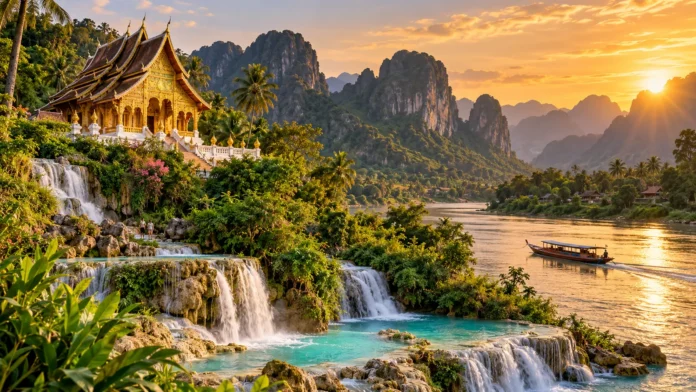
Kuang Si Waterfall is one of the most popular natural attractions in Laos, located approximately thirty kilometers from Luang Prabang. This spectacular multi-tiered waterfall is famous for its cascading water, tropical greenery, and striking turquoise pools. The surrounding forest creates a refreshing atmosphere, making it an excellent destination for photography, sightseeing, and peaceful nature walks.
Visitors can follow designated paths through the waterfall area to admire different viewpoints and smaller cascades. Certain pools may be open for swimming when conditions allow, but travelers should always follow posted safety instructions. The waterfall’s appearance changes throughout the year, with water color and flow influenced by rainfall. Comfortable footwear makes exploring the surrounding trails easier.
The Kuang Si area also features a bear rescue center where visitors can learn about conservation efforts. Many travelers combine the waterfall excursion with other attractions around Luang Prabang. Arriving earlier may provide a quieter experience during busy periods. This beautiful natural landmark deserves a place on almost every first-time Laos travel itinerary.
3. Vientiane: Explore the Charming Capital of Laos
Vientiane, the capital of Laos, offers an appealing combination of Buddhist temples, historic monuments, riverside scenery, and modern city life. Located beside the Mekong River, the city feels more relaxed than many larger Southeast Asian capitals. Its walkable sightseeing areas and cultural attractions make it a convenient destination for travelers beginning or ending their journey.
Pha That Luang is one of the city’s most important landmarks and a major symbol of Lao national identity. This impressive golden Buddhist stupa attracts visitors interested in architecture, religion, and history. Other popular attractions include Patuxai, a monumental arch, and Wat Si Saket, a historic temple featuring numerous Buddha images and traditional architectural details.
Visitors can also explore the COPE Visitor Centre to learn about the continuing effects of unexploded ordnance and rehabilitation efforts in Laos. In the evening, the Mekong riverfront provides a pleasant setting for strolling and enjoying local food. Vientiane is particularly suitable for travelers who appreciate cultural experiences without an overly demanding sightseeing schedule.
4. Vang Vieng: Admire Limestone Mountains and Rivers
Vang Vieng is one of the most scenic destinations in Laos, surrounded by dramatic limestone mountains, green rice fields, and beautiful river landscapes. Located between Vientiane and Luang Prabang, this town is popular among travelers seeking outdoor experiences and impressive natural scenery. Its mountainous surroundings create memorable opportunities for landscape photography and peaceful countryside exploration.
The Nam Song River is one of Vang Vieng’s defining natural features, flowing past towering cliffs and rural landscapes. Visitors can enjoy the views from riverside cafés, bridges, and designated viewpoints. Nearby lagoons and caves provide additional sightseeing opportunities, although accessibility depends on local conditions. Guided excursions are useful when exploring unfamiliar natural environments.
Vang Vieng also offers an attractive atmosphere for travelers who prefer slower-paced activities. Cycling along suitable local routes, photographing mountain scenery, and exploring the town’s food markets can create an enjoyable itinerary. Choose reputable operators for organized excursions and follow weather-related safety advice. The combination of mountains, countryside, and rivers makes Vang Vieng a memorable destination.
5. Plain of Jars: Explore a Mysterious Archaeological Site
The Plain of Jars is one of the most fascinating historical attractions in Laos, located in Xieng Khouang Province. This UNESCO World Heritage archaeological landscape contains thousands of large stone jars scattered across hillsides and open fields. Their origins and original purposes have attracted considerable archaeological interest. The site provides an unusual glimpse into the region’s ancient history.
Researchers generally associate the jars with ancient funerary practices, although important questions remain about their use and cultural context. Visitors can explore designated archaeological sites where enormous stone containers stand against beautiful countryside scenery. The scale and arrangement of these mysterious monuments make the destination particularly appealing to history enthusiasts and travelers interested in archaeology.
Some areas surrounding the Plain of Jars remain affected by unexploded ordnance from past conflicts. Visitors must stay on clearly marked routes and never enter restricted areas. Exploring with a knowledgeable local guide can provide useful historical context and help ensure safe movement. This remarkable destination combines cultural heritage, archaeological discovery, and important lessons about Laos’ modern history.
6. Pak Ou Caves: Discover Sacred Buddhist Traditions
The Pak Ou Caves are among the most distinctive cultural attractions near Luang Prabang. Located where the Nam Ou River meets the Mekong, these limestone caves contain numerous Buddha statues placed there over generations. Their spiritual significance makes them an important destination for understanding local Buddhist traditions. The surrounding river scenery adds to the experience.
Visitors usually reach the caves by boat or through a combination of road travel and a shorter river crossing. The lower cave contains many Buddha images, while the upper cave requires climbing steps and offers a different atmosphere. Exploring both sections provides a better understanding of the site. Carrying a small flashlight may be useful in darker areas.
The boat journey can be a memorable part of visiting Pak Ou Caves, with views of riverside settlements, forested hills, and traditional river life. Travelers should dress respectfully because the caves are religious sites. Follow local instructions and avoid touching sacred objects. This cultural excursion combines spiritual heritage with some of northern Laos’ most beautiful natural landscapes.
7. Bolaven Plateau: Discover Waterfalls and Coffee Plantations
The Bolaven Plateau in southern Laos is known for its cooler upland climate, fertile landscapes, impressive waterfalls, and coffee-growing traditions. This beautiful region offers a refreshing contrast to the country’s warmer lowland destinations. Travelers interested in nature and rural culture will find several worthwhile attractions. Its green scenery makes it particularly appealing for countryside photography.
Tad Fane is one of the plateau’s best-known waterfalls, featuring dramatic cascades surrounded by dense vegetation. Tad Yuang is another popular attraction, offering impressive scenery and designated viewpoints. Waterfall conditions vary with rainfall and seasonal changes. Visitors should follow established paths and avoid approaching steep or slippery edges when exploring these natural landmarks.
Coffee plantations are another important feature of the Bolaven Plateau, where suitable growing conditions support local production. Some farms offer opportunities to learn about cultivation, processing, and regional agricultural traditions. Travelers can also visit nearby villages and enjoy rural landscapes. Combining waterfall sightseeing with a coffee plantation visit creates a well-rounded experience of southern Laos.
8. Si Phan Don: Experience the Peaceful 4,000 Islands
Si Phan Don, commonly called the 4,000 Islands, is a beautiful river region in southern Laos near the Cambodian border. The Mekong River spreads into numerous channels around islands, sandbars, and small settlements. This peaceful destination is known for its relaxed atmosphere, traditional riverside communities, and scenic sunsets. It is ideal for travelers seeking a slower pace.
Don Det and Don Khon are among the best-known islands for visitors, offering guesthouses, small restaurants, and rural scenery. Travelers can explore village surroundings, admire river views, and discover historical remnants from the region’s colonial railway. Walking or cycling along suitable routes provides opportunities to appreciate local life. River levels and seasonal conditions influence some activities.
The wider area includes impressive waterfalls such as Khone Phapheng, where the Mekong flows through a powerful series of cascades. Designated viewpoints allow visitors to appreciate the scenery from safer locations. Travelers should avoid entering dangerous river channels because currents can be extremely strong. Si Phan Don offers a distinctive combination of natural beauty and peaceful countryside experiences.
9. Wat Phou: Visit an Ancient UNESCO World Heritage Temple
Wat Phou is one of Laos’ most important historical sites, located near Champasak in the southern part of the country. This UNESCO World Heritage landscape features an ancient Khmer temple complex with remarkable architectural remains. Its history is closely connected with religious traditions and the cultural development of the wider Mekong region. The setting adds considerable beauty to the experience.
The temple complex includes stone pathways, terraces, historic structures, and religious features arranged against a mountain landscape. Visitors can explore designated areas while learning about the site’s historical connection to Hindu worship and later Buddhist traditions. Its architecture reveals important influences from the Khmer civilization. The elevated surroundings also provide attractive views across the countryside.
Exploring Wat Phou is particularly rewarding for travelers interested in archaeology, architecture, and Southeast Asian history. Comfortable walking shoes are helpful because parts of the complex involve uneven surfaces and steps. Visiting during cooler hours may make sightseeing more comfortable. The site offers a fascinating opportunity to experience Laos’ historical heritage beyond its best-known Buddhist temples.
10. Nong Khiaw: Enjoy Mountain Views and Rural Landscapes
Nong Khiaw is a picturesque town in northern Laos, surrounded by steep limestone mountains and beautiful river scenery. Located along the Nam Ou River, it offers an appealing atmosphere for travelers interested in nature and peaceful countryside destinations. The town’s dramatic surroundings make it especially popular for photography. Its slower rhythm encourages visitors to appreciate the landscape.
Several viewpoints around Nong Khiaw provide memorable perspectives of the river, mountains, and surrounding settlements. Some hiking routes involve steep terrain and require suitable footwear and preparation. Visitors can also enjoy riverside accommodation, local restaurants, and organized cultural excursions. Choosing activities appropriate to your experience helps make the visit more comfortable and enjoyable.
Nong Khiaw is also a useful starting point for discovering selected nearby rural communities through responsible tourism experiences. Visitors should respect local customs and seek permission before photographing residents. Travel arrangements may change depending on road conditions and seasonal weather. The area’s mountain scenery and relaxed character make it a rewarding addition to a northern Laos itinerary.
11. Thakhek and Kong Lor Cave: Discover Central Laos
Central Laos offers impressive limestone landscapes, rural communities, and fascinating cave systems that are less familiar to many first-time visitors. Thakhek is an important regional town and a gateway to surrounding natural attractions. The wider Khammouane region is known for towering limestone formations and beautiful countryside scenery. Travelers interested in geology and nature will find much to explore.
Kong Lor Cave is one of the region’s most remarkable attractions, featuring an extensive underground river passage through a limestone mountain. Authorized guided boat excursions allow visitors to appreciate the cave’s impressive interior when conditions permit. The journey offers an unusual perspective on the region’s geological formations. Access may be restricted during unsuitable water or weather conditions.
Travelers should use established operators, wear required safety equipment, and follow guide instructions throughout any cave excursion. The surrounding area also features rural scenery and small communities worth experiencing respectfully. Because attractions are spread across considerable distances, allow enough time for transportation. Central Laos rewards thoughtful planning with memorable landscapes and distinctive natural heritage.
12. Best Time to Visit Laos and Essential Travel Tips
The best time to visit Laos is generally during the cooler, drier months from November through February. This period often provides more comfortable conditions for sightseeing, cultural exploration, and countryside excursions. March and April can become very hot, while the rainy season usually extends from around May through October. Actual weather varies by region and elevation.
The rainy season transforms much of Laos into a lush green landscape, making waterfalls particularly impressive. However, heavy rainfall can affect road conditions, river transport, and certain outdoor attractions. Travelers should remain flexible when visiting remote destinations. Checking local forecasts and transportation arrangements helps reduce disruption and supports a more enjoyable travel experience.
Before traveling, verify passport validity, visa requirements, and current entry rules for your nationality. The Lao kip is the local currency, and carrying some cash can be useful outside major tourist areas. Dress respectfully when visiting religious sites and choose responsible local tour operators. Allow sufficient travel time between destinations because mountainous roads and regional transportation may be slower than expected.
Conclusion
Laos is a remarkable Southeast Asian destination that combines ancient temples, spectacular waterfalls, dramatic mountains, and peaceful riverside communities. From the cultural beauty of Luang Prabang to the fascinating Plain of Jars and scenic Bolaven Plateau, the country offers diverse experiences. Each destination reveals a different aspect of Lao history, landscapes, and traditions. Exploring these attractions provides an unforgettable introduction to the country.
The best places to visit in Laos depend on your interests, available time, and preferred travel style. History enthusiasts may enjoy Wat Phou and Vientiane, while nature lovers can explore Kuang Si Waterfall, Nong Khiaw, and the 4,000 Islands. Choosing a realistic itinerary helps you spend more time enjoying destinations rather than rushing between them.
Ultimately, Laos rewards travelers who appreciate natural beauty, meaningful cultural experiences, and a relaxed approach to exploring. Plan around seasonal weather, respect local traditions, and prioritize responsible tourism throughout your journey. Whether you are planning a short vacation or a longer Southeast Asian adventure, Laos offers memorable attractions and welcoming landscapes that make every journey worthwhile.
Frequently Asked Questions (FAQs)
1. What are the best places to visit in Laos?
The best places to visit in Laos include Luang Prabang, Kuang Si Waterfall, Vientiane, Vang Vieng, the Plain of Jars, Wat Phou, Nong Khiaw, and the 4,000 Islands.
2. What is the best time to visit Laos?
November through February is generally the best time to visit Laos because temperatures are relatively comfortable and rainfall is lower. These conditions are particularly suitable for sightseeing and exploring outdoor attractions.
3. How many days are enough to explore Laos?
Seven to ten days allow travelers to explore several major attractions, including Luang Prabang, Vang Vieng, and Vientiane. A longer trip provides more time for southern Laos and remote destinations.
4. Is Laos worth visiting for tourists?
Yes, Laos offers beautiful natural scenery, historic Buddhist temples, UNESCO World Heritage sites, and traditional cultural experiences. Its relaxed atmosphere makes it especially appealing to travelers interested in nature and heritage.
5. What is Laos most famous for?
Laos is famous for Luang Prabang, Kuang Si Waterfall, the Mekong River, Buddhist temples, limestone mountains, and the mysterious Plain of Jars. These attractions highlight its cultural and natural heritage.